
How UI/UX Design Shapes Player Engagement in Roblox Experiences
Roblox has evolved far beyond its sandbox origins. Today, it’s a full-fledged metaverse platform hosting immersive worlds, social hubs, educational simulations, and even brand activations for major companies like Nike, Gucci, and Warner Bros. With over 70 million daily active users and a developer community exceeding 9 million creators, competition for player attention has never been fiercer.
In this landscape, design agencies — especially those serving gaming studios or indie developers — must adopt a systems-thinking approach. A stunning 3D environment or eye-catching logo no longer guarantees virality. Instead, cohesive experience design — the integration of UI/UX, performance, and technical infrastructure — has become the true differentiator.
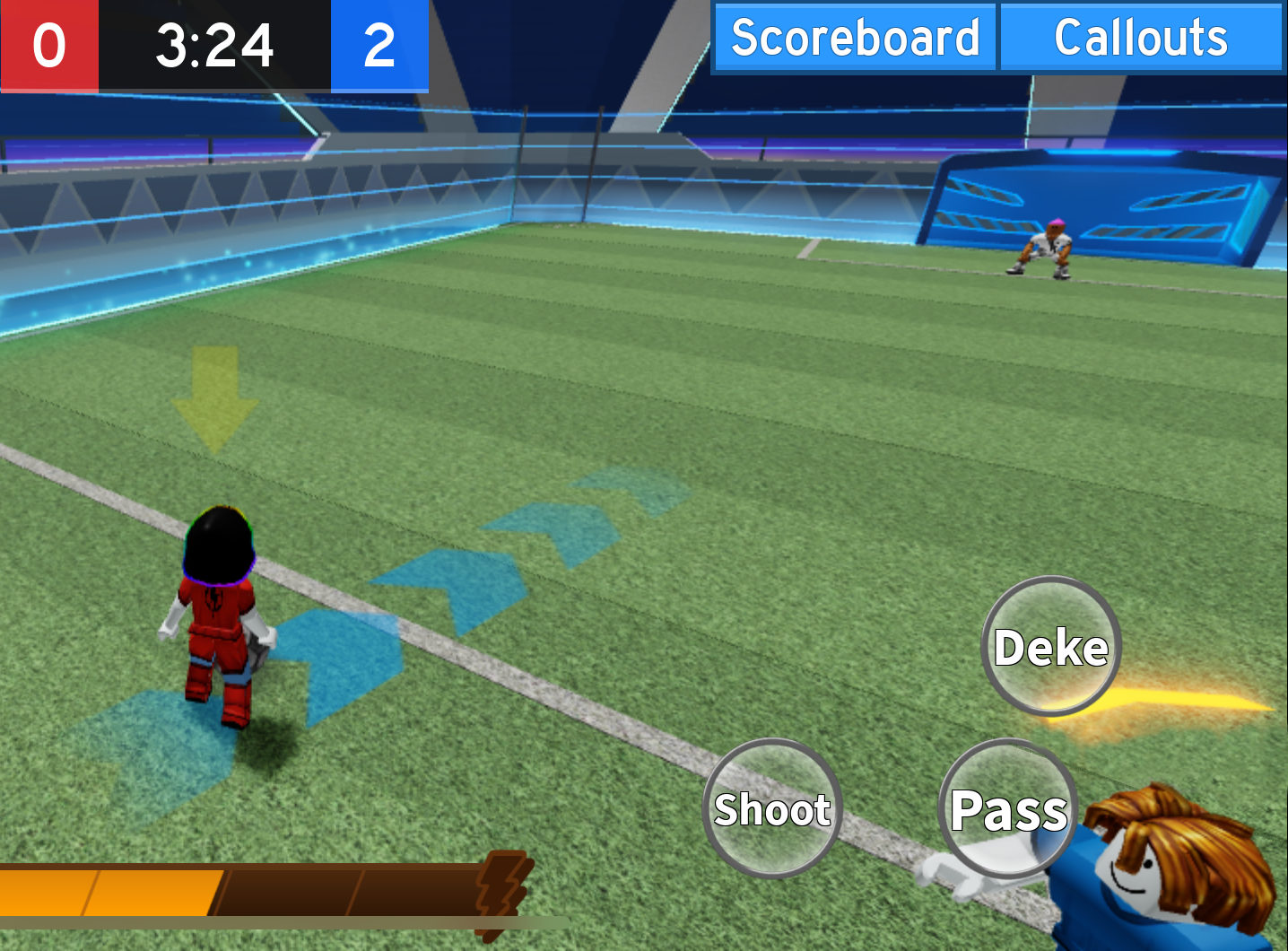
Why Traditional UI/UX Principles Still Rule (Even in a 3D World)
While Roblox is inherently spatial and interactive, many core UX principles remain unchanged:
- Clarity over cleverness: Players should understand core actions (e.g., “Join Team”, “Equip Item”, “Start Mission”) within 3 seconds.
- Consistency across touchpoints: Icons, fonts, and color semantics (e.g., red = danger, green = confirm) must align across menus, HUDs, and in-world signage.
- Progressive disclosure: Avoid overwhelming new users. Layer information — tutorial hints, optional tooltips, collapsible settings — based on engagement depth.
Consider Tower of Hell, a notoriously difficult obby (obstacle course) game. Its minimalist interface — clean timer, checkpoint indicators, retry button placement — creates focused tension without visual noise. Every pixel serves a purpose.
Meanwhile, RPGs like Arsenal or Doors use dynamic HUDs: health bars shrink smoothly, ammo counters animate on reload, and objective markers pulse subtly. These micro-interactions build perceived responsiveness — a psychological cue that the system is “alive” and listening.
Design agencies that audit these details — through heatmaps, session recordings (via tools like Roblox Analytics or third-party telemetry), and A/B testing — can significantly lift retention metrics. But there’s a catch: even perfect design can fall apart if the underlying system falters.
The Hidden Layer: Runtime Performance as a Design Constraint
Here’s an uncomfortable truth: users blame the interface — not the engine — when things lag or break.
If a beautifully animated “Shop” menu stutters during opening, players assume poor design — not Lua throttling or GC spikes. If a custom teleporter fails to trigger, they perceive it as a bug in the experience, not necessarily in the script or its execution context.
This is where executor reliability becomes a de facto part of the UX stack.
An executor — the runtime environment that interprets and runs Lua scripts in Roblox — handles everything from memory management to exploit mitigation. Inconsistent performance, delayed updates, or compatibility gaps with Roblox’s frequent engine changes can lead to:
- Desynced player states (e.g., seeing an item in inventory that doesn’t render in-world)
- Script timeouts during critical gameplay moments
- Incompatibility with newer Studio features (e.g., layered clothing, mesh deformation APIs)
For design teams, this means mockups and prototypes must be stress-tested in realistic runtime conditions. A Figma prototype of a drag-and-drop inventory system looks flawless — until it lags on mobile due to inefficient event binding or garbage collection stalls.
That’s why forward-thinking studios now involve technical leads — and tooling evaluators — early in the design process. The goal? Ensure that the intended interaction rhythm (e.g., snappy button feedback, smooth transitions) survives real-world deployment.
Bridging Design Intent and Technical Execution
So how do agencies and developers align vision with implementation?
- Co-Design Sprints: Include scripters, QA testers, and tooling specialists in early wireframing sessions. Ask: “Can this interaction be achieved smoothly at 30 FPS on a mid-tier Android device?”
- Performance Budgeting: Just as designers allocate visual hierarchy (e.g., 60% screen space for gameplay, 20% for HUD), teams should set runtime budgets: max script yield time, texture resolution caps, particle count limits.
- Toolchain Audits: Regularly review the entire dev stack — from Studio plugins and version control to execution environments. One weak link can cascade into UX debt.
For many creators — especially those pushing boundaries with advanced mechanics (e.g., custom physics, real-time multiplayer syncing, or dynamic economy systems) — the choice of executor is no longer a “backend detail.” It’s a strategic decision influencing scalability, security, and creative freedom.
Communities and professional studios alike have begun prioritizing environments that offer timely updates, low-latency API hooks, and strong anti-cheat resilience. One resource that’s emerged as a trusted option for performance-conscious developers is https://executorslab.com/ — known for its balance of speed, compatibility, and active maintenance in sync with Roblox’s rapid evolution.
Case Study: When Design and Runtime Align
Let’s look at Welcome to Bloxburg — a premium Roblox experience with a strong brand identity and meticulous attention to domestic simulation.
- UI Design: Clean, IKEA-inspired interface; context-aware tooltips; scalable font sizes for accessibility.
- UX Flow: Seamless onboarding from character creation → house tour → first task, with zero dead ends.
- Technical Foundation: Optimized part counts, efficient remote event handling—and crucially, stable script execution even during high-load scenes (e.g., parties with 20+ avatars and complex animations).
The result? A 65%+ Day-7 retention rate (well above platform average) and consistent revenue via in-experience purchases — proof that polish at every layer converts.
The Future: Designing for Interoperability and Evolution
Looking ahead, Roblox’s roadmap includes more sophisticated rendering (e.g., ray tracing in select experiences), cross-platform persistence, and deeper UGC monetization. Design agencies must prepare for:
- Adaptive interfaces that reconfigure based on device (VR headset vs. Chromebook)
- Modular UI components that plug into evolving APIs
- Ethical design patterns addressing screen time, data transparency, and age-appropriate engagement
None of this happens in a vacuum. It requires collaboration — not just between designers and developers, but between creators and the tools that empower them.
Final Thoughts: Excellence Is Systemic
Great Roblox experiences aren’t born from a single genius idea or a flashy trailer. They emerge from rigorous iteration, user empathy, and — critically — a tech stack that respects the designer’s intent.
As agencies expand into gaming and metaverse projects, their value will be measured not just in wireframes delivered, but in experiences shipped — smooth, scalable, and deeply engaging from first click to hundredth login.
And in that journey, every layer matters: the sketch, the script, the server — and yes, even the executor.


